
Leak detected. Water off.
Aqualarm sensors find water where it should not be. The Main Unit+ closes a motorised valve on your supply pipe and, with a gateway, alerts your phone wherever you are.
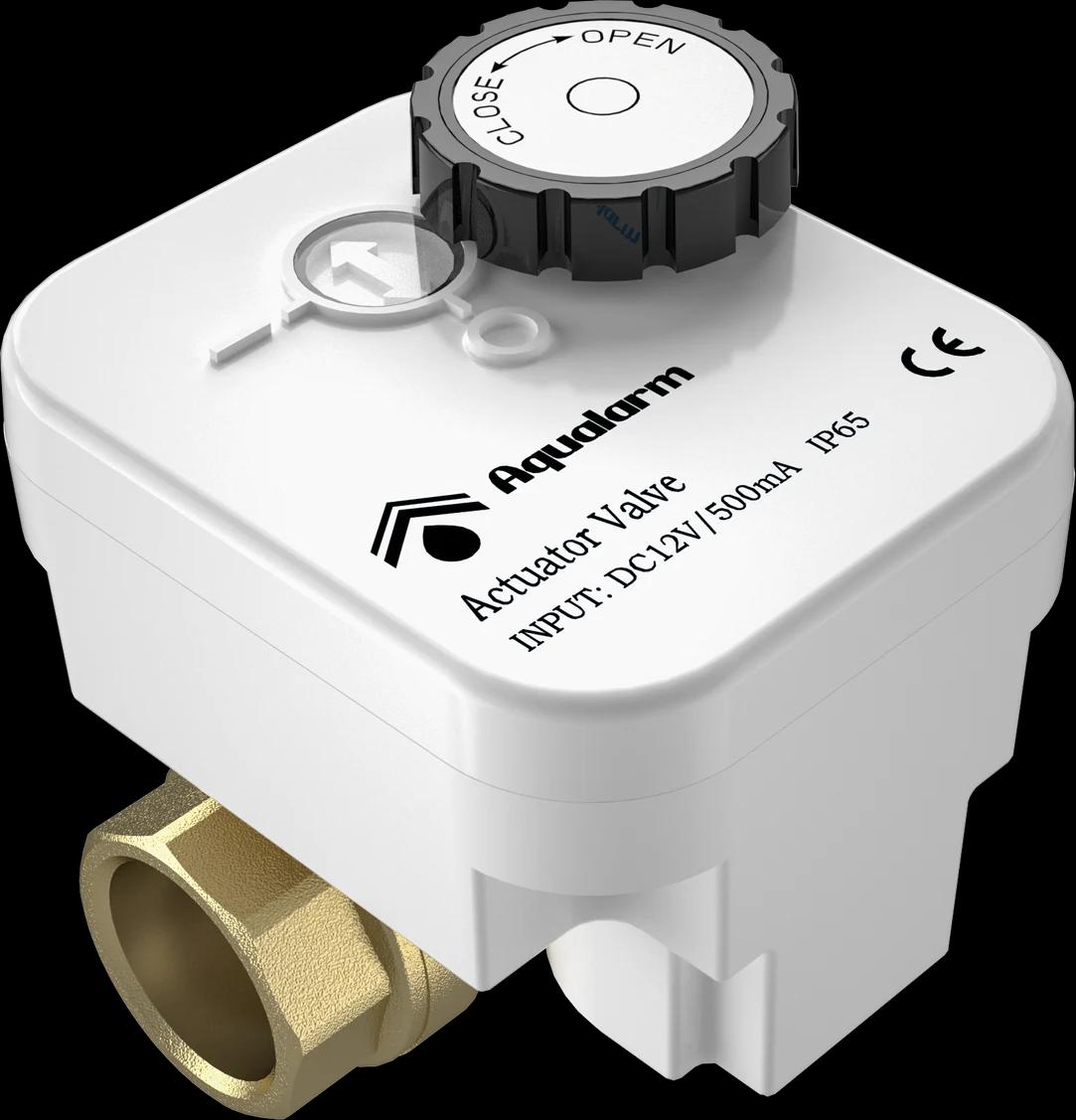
Drag to look around. Interactive model, not to scale.
From the first drop to a closed valve
Three parts do the work: sensors that detect, a hub that decides, and a valve that closes. Add a gateway and the system reports to your phone or your building systems.
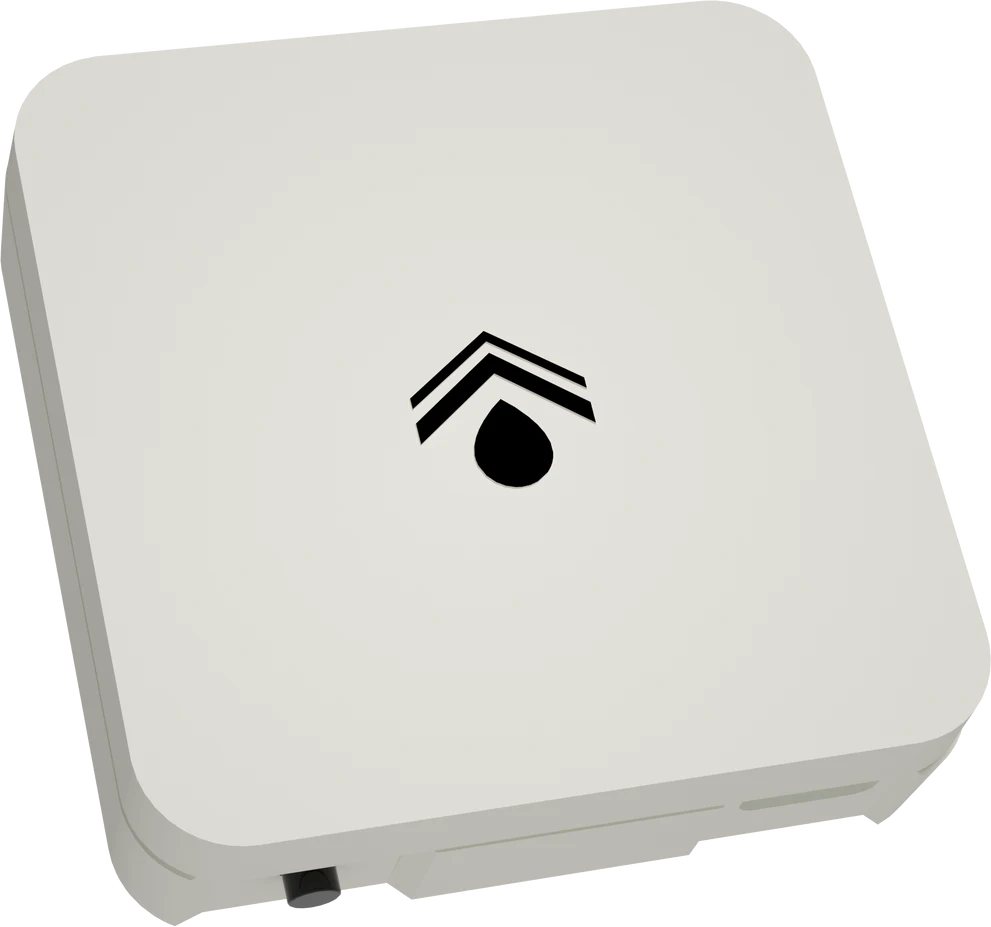
Sensor units
NEW End Unit, End Unit or Door Unit detect water or take a command.
434.7 MHz radio
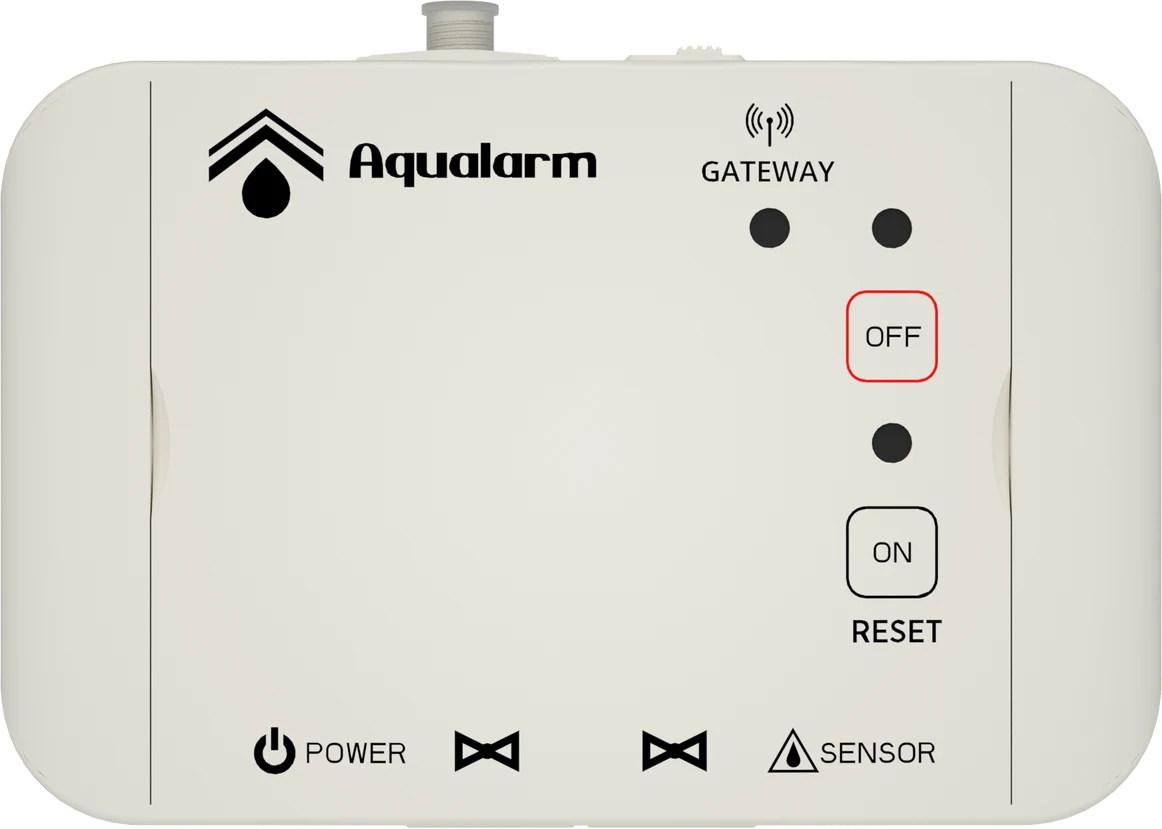
Main Unit+
Receives the alarm, sounds the buzzer and drives up to two valves.
Valve cable
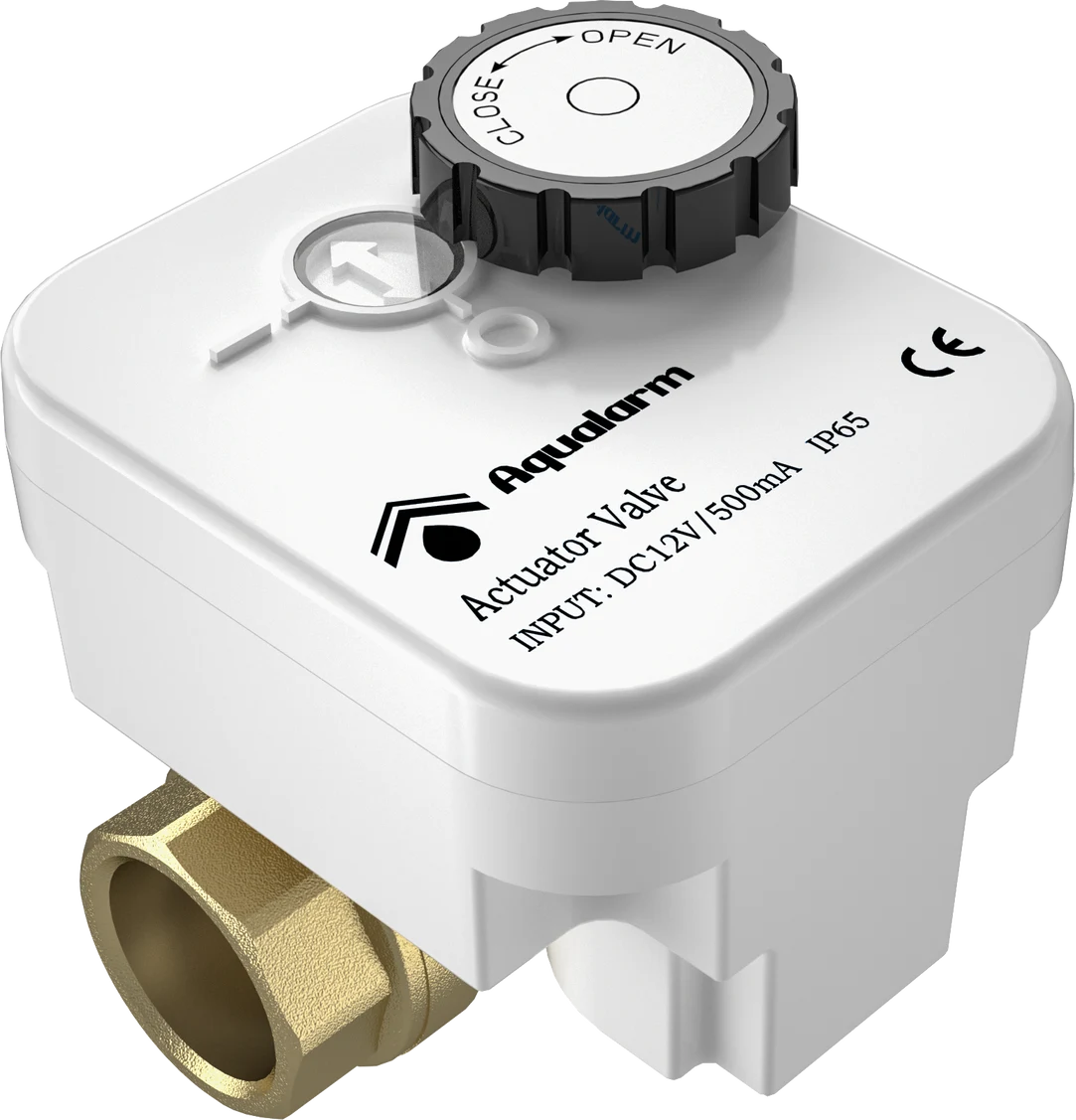
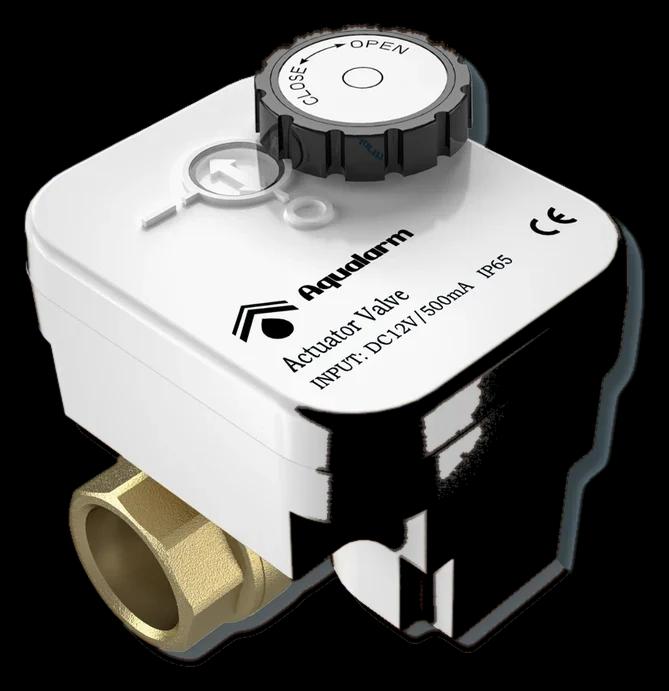
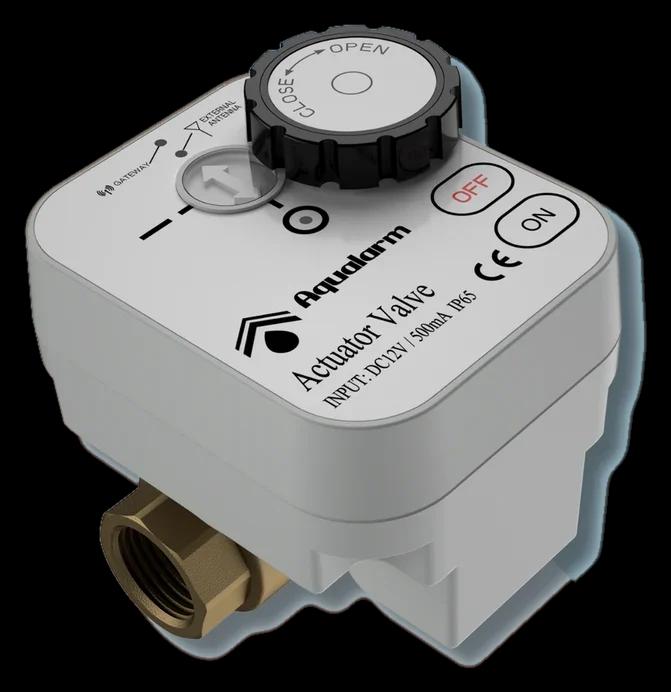
Actuator valve
Closes the incoming supply pipe.
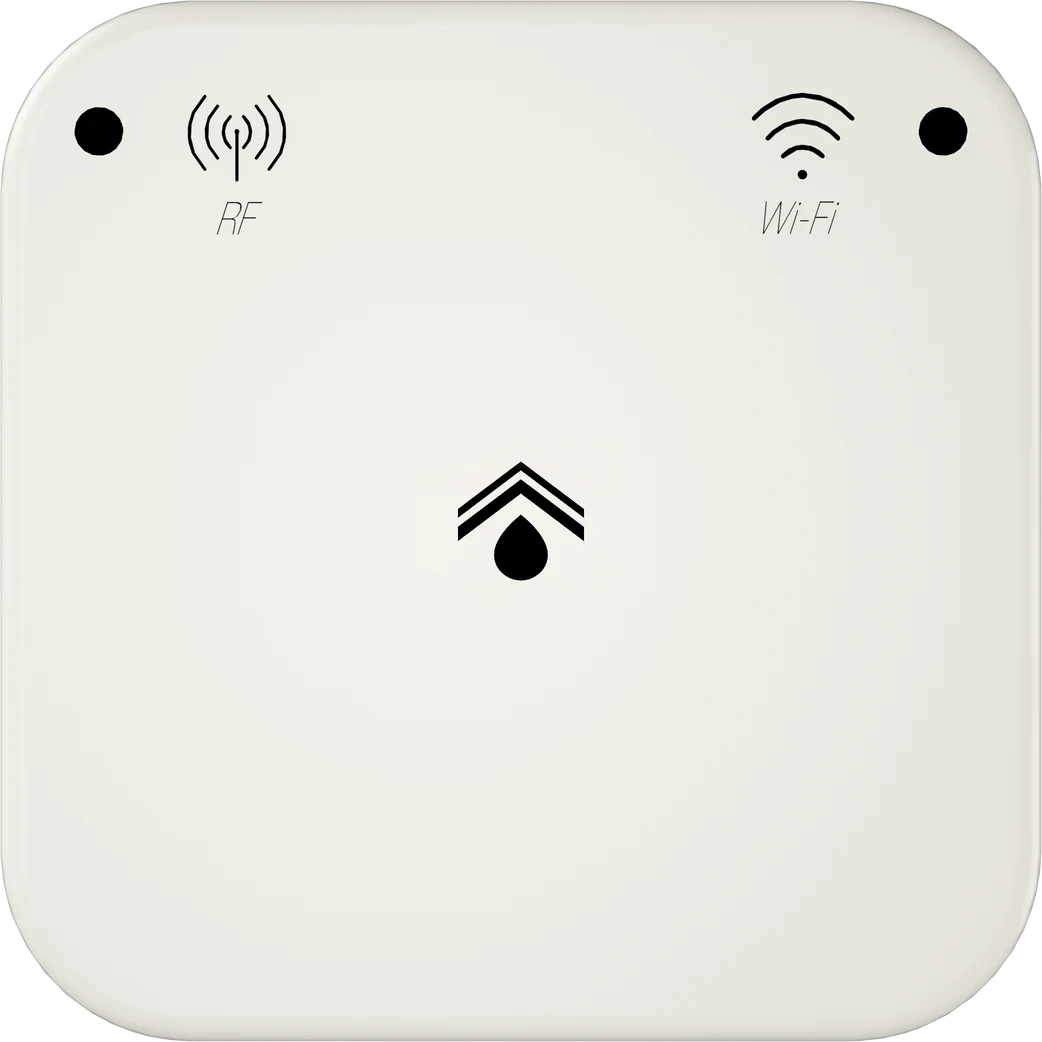
Gateway
Paired with the Main Unit+ by radio. Sends the alert over Wi-Fi to the app, or by dry contact to a BMS.
- 1
Detect
A sensor unit or sensor wire touches water and raises the alarm.
- 2
Signal
The alarm reaches the Main Unit+ by 434.7 MHz radio, and its buzzer sounds.
- 3
Shut off
The Main Unit+ drives the actuator valve closed on the incoming supply.
- 4
Notify
With a gateway, the alert goes to the Aqualarm app or to the building management system.
Product range
All 31 productsActuator valves
4 models, 6 sizes eachMotorised ball valves in brass and bronze, DN15 to DN50, that close the supply when a leak is found.
Control units
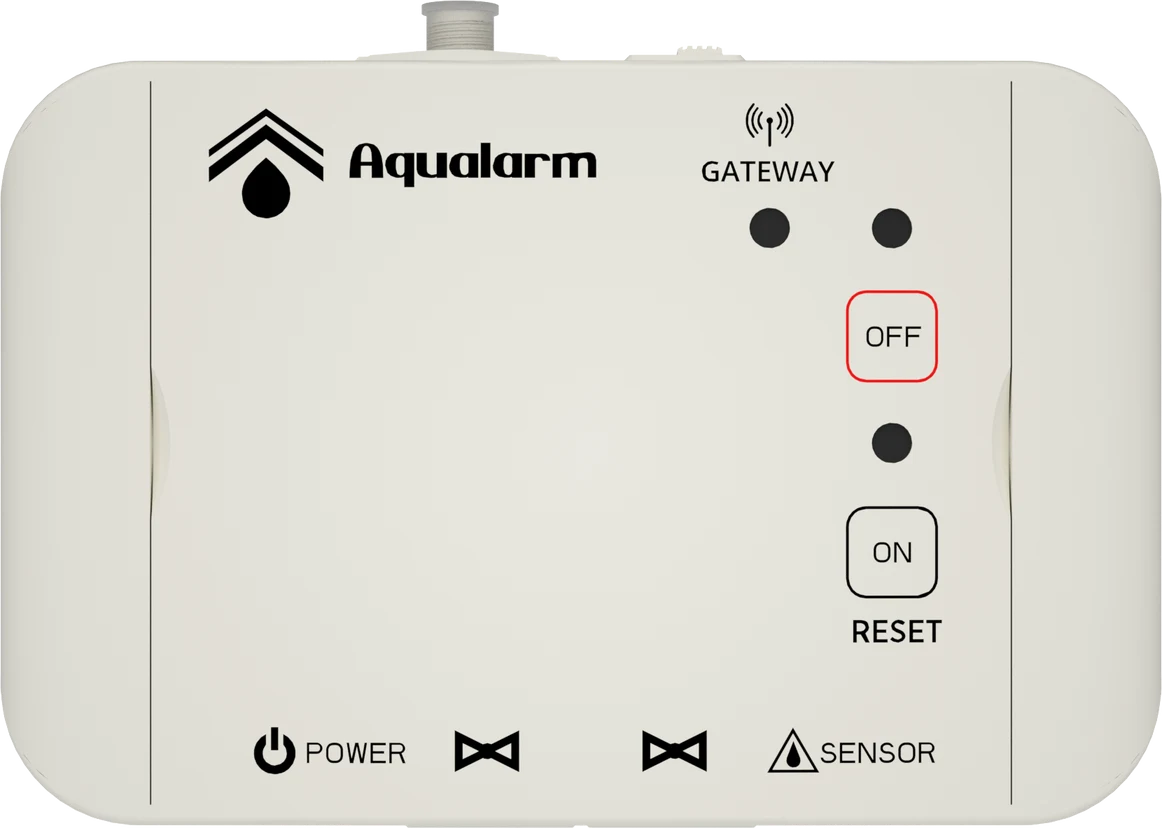
The hub that listens to sensors and drives the valves. Cable, wireless and plug-in versions.
3 products
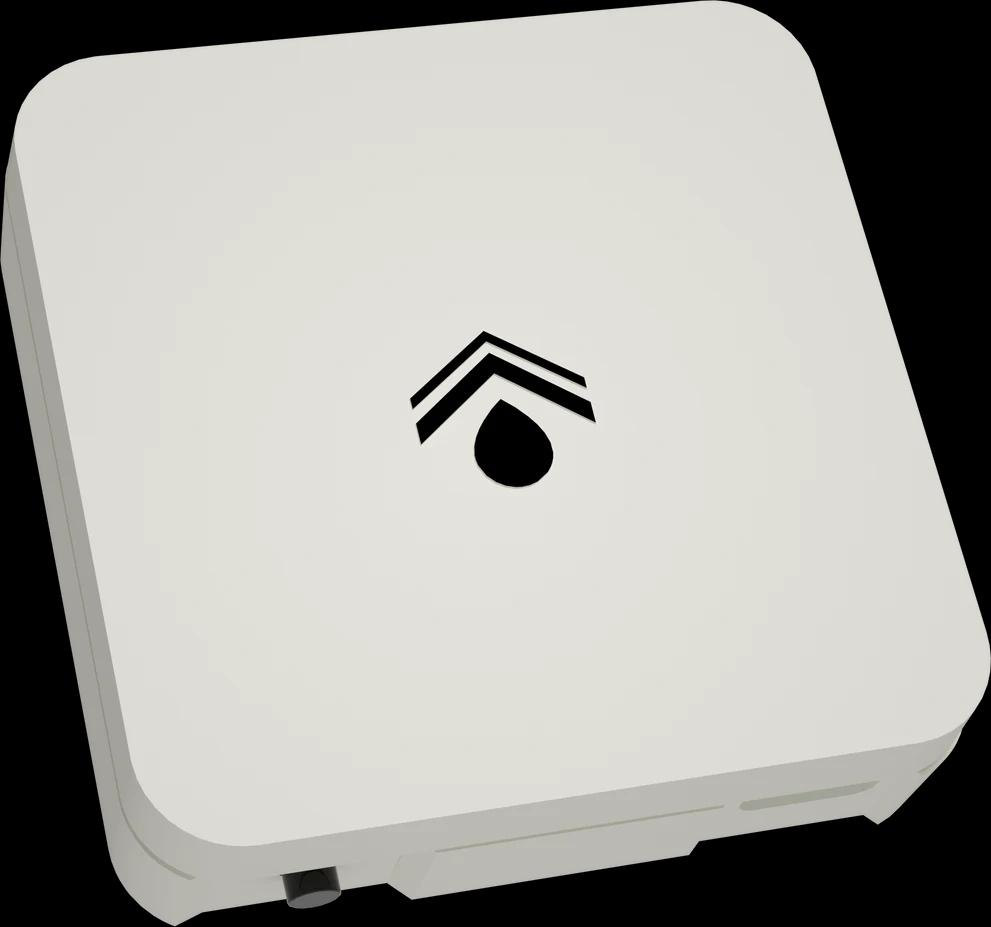
Sensor units
Battery-powered radio units that report water, plus a door panel for leaving home.
3 products
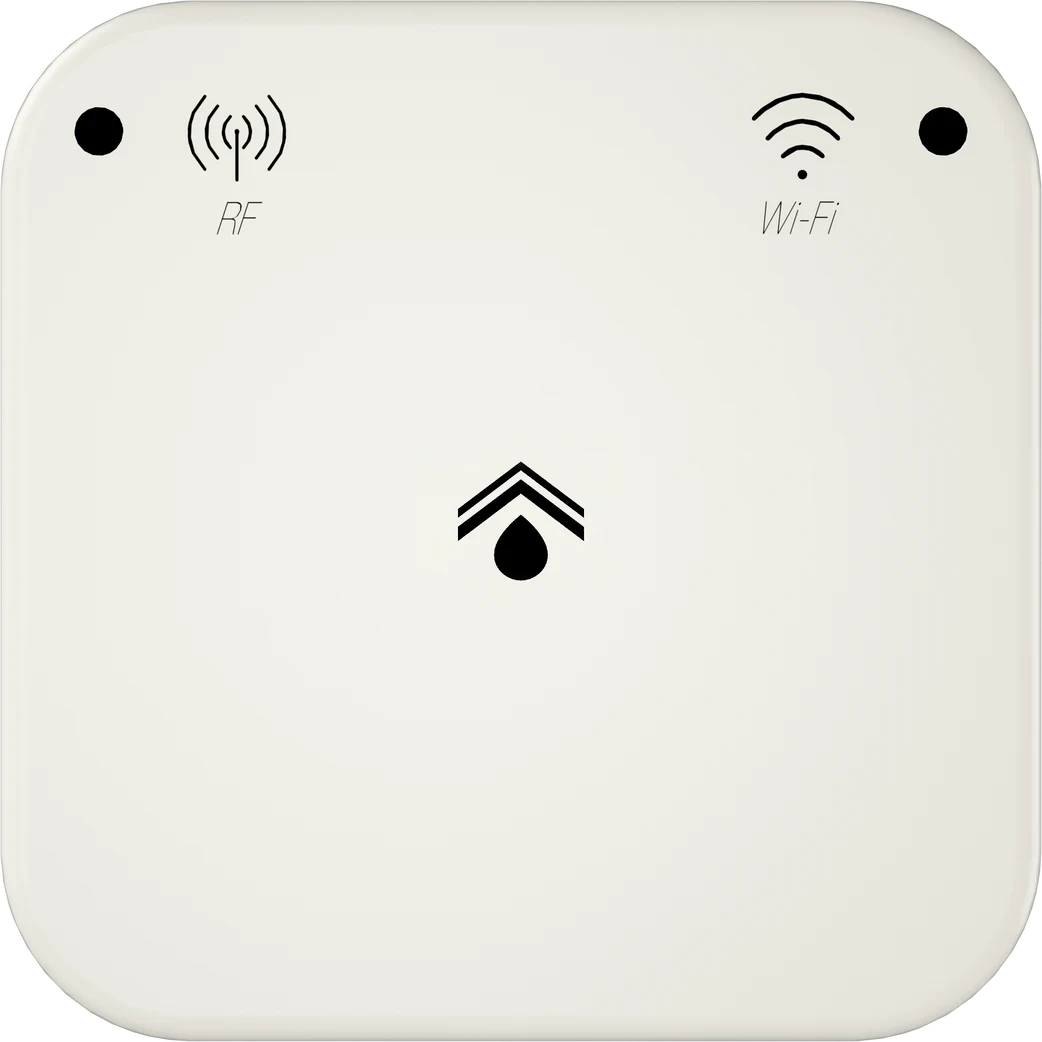
Gateways
Connect the system to Wi-Fi, the Aqualarm apps and building management systems.
4 products
Accessories
Sensor plates and wires, extensions, adapters, antennas and power.
14 products
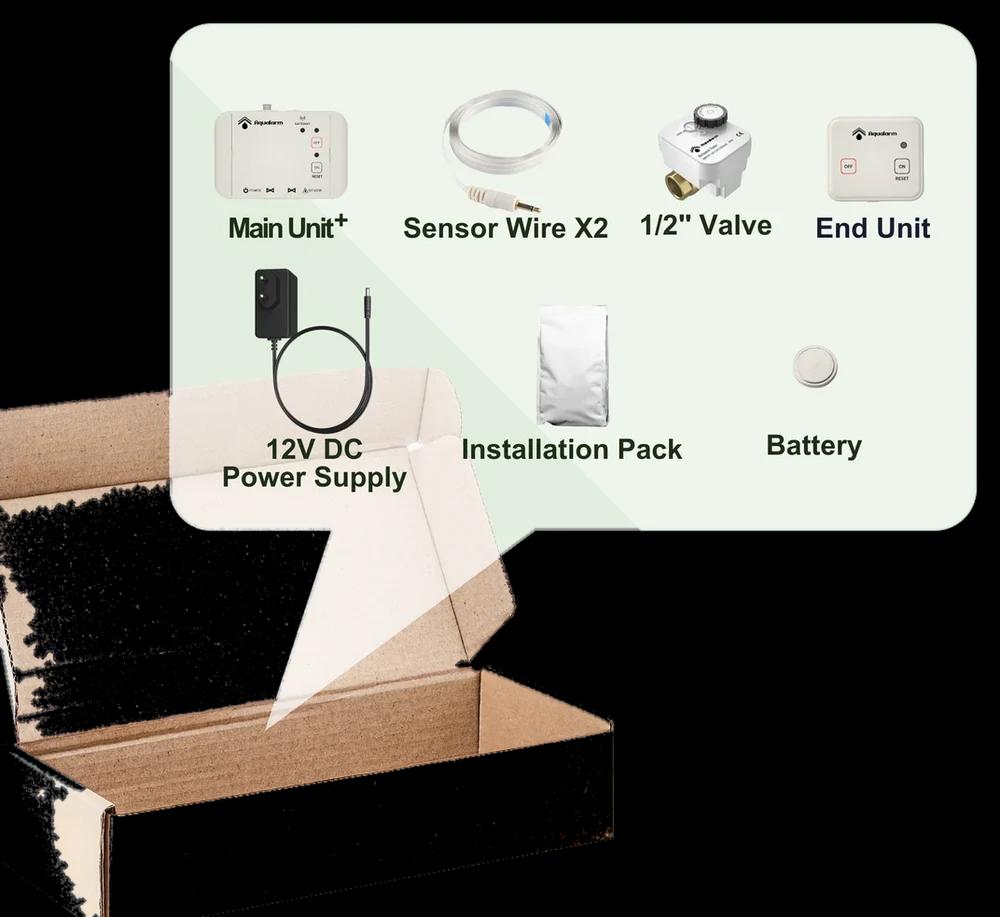
Starter kits
Cable, wireless and PowerStop kits with everything for one installation, with the valve sized ½″, ¾″ or 1″ to your pipe.
See how it fits on your pipe
Follow a valve from the box to the water main in an interactive 3D walkthrough: where it goes, how it connects and what happens when a sensor gets wet.
Start the walkthrough- 1Start at the water main
- 2Choose the position
- 3Shut off, drain and cut in
- 4Fit the valve
- 5Connect the Main Unit+
- 6Place the sensors
- 7Open the water and test
- 8It keeps itself ready
Where it is used
The same parts scale from one flat to a building. These are typical starting configurations. We adapt them to the site.
Apartments and houses
Burst hoses, leaking water heaters and toilet cisterns, often while nobody is home.
Typical configuration:
Kitchens and laundry
Washing machines and dishwashers that leak while running, with water near live sockets.
Typical configuration:
Archives and records rooms
Slow leaks from pipes above shelving that go unnoticed until documents are damaged.
Typical configuration:
Detection only. Add an actuator valve to cut the supply automatically.
Data centres and plant rooms
Cooling and condensate leaks under raised floors, close to power and equipment.
Typical configuration:
Multi-storey buildings
Shutting off one floor for maintenance or a leak without walking to every valve.
Typical configuration:
Monitor and operate every floor valve from one control room.
Tested and approved
Test reports and certificates are published in full, so specifiers and insurers can check them.
View all 17 documents| Mark | What it covers | Applies to |
|---|---|---|
| CE | EMC conformity | Actuator and control units |
| IP65 | Dust-tight and protected against water jets | Actuator, NEW End Unit |
| PN16 | Pressure rating up to 16 bar | All actuator valves |
| NS-EN 13828 | Valve tested by SINTEF, Norway | Actuator valve and leak stopper |
| KTW / TZW | Drinking water material and hygiene tests | Brass valve bodies |
| WSD | Hong Kong Water Supplies Department General Acceptance | Actuator valves |
| CB / LVD | Electrical safety | Power adapters |
Planning a project or stocking Aqualarm?
Tell us about the site, the pipe sizes and how you want to be alerted. Our engineers will propose a configuration and a quotation. Distributor and OEM enquiries are welcome.
For a faster quote, include
- Supply pipe size, from ½″ to 2″
- Drinking water, or flushing and sea water
- How many wet rooms or areas to cover
- How you want alerts: buzzer only, app or BMS